What is OLYFO certified for?
Last reviewed 8 August 2026.
Ecocert organic under operator code TN-BIO-001, valid for both EU Organic and USDA NOP. ISO 22000. HACCP. Halal. Non-GMO. FDA food facility registration 18131951200. Kosher is in progress. Below is what each one actually gets you, because a logo strip on a website tells a buyer very little.
What each certificate is for
- Ecocert organic, TN-BIO-001. Covers both the EU Organic regime and the USDA National Organic Program, so one certification serves European and American buyers. It applies to OLYFO Gold Organic, certified organic Chemlali. It is verified by annual third-party inspection, not self-declared.
- ISO 22000. A food safety management standard covering the whole chain rather than one factory. It is the certificate most professional buyers and retail listing forms ask for by name.
- HACCP. The hazard analysis system underneath it: identify where contamination could occur, control those points, document it. Often a legal requirement rather than an option.
- Halal. Olive oil is inherently halal. Importers and retailers in several markets require the certificate anyway, so we hold it rather than argue the point.
- Non-GMO. Straightforward for olives, and asked for routinely in North America and Northern Europe.
- FDA food facility registration 18131951200. Not a quality mark. It is the registration a foreign food facility must hold before its goods can be imported into the United States at all. Without it, a shipment stops at the border.
- Kosher. In progress. We would rather say that than imply it.
The certificate that matters most is the one nobody lists
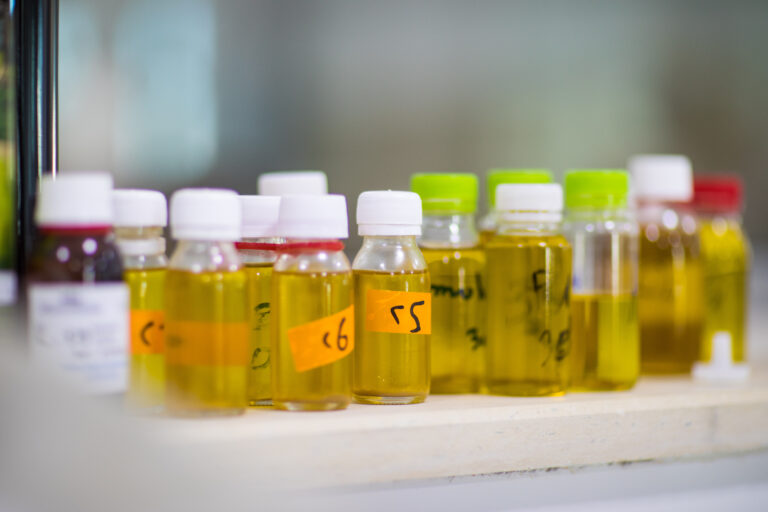
Every consignment ships with a certificate of analysis for that specific lot: free acidity, peroxide value, and the sensory panel result. Company certifications tell you the process was audited. The certificate of analysis tells you what is in the container you are paying for. If they ever disagree, the certificate of analysis wins — including against any number published on this website.
Organic consignments also carry a transaction certificate issued for that lot and that destination. An organic certificate on a company does not make a particular container organic in the eyes of a customs authority; the transaction certificate does. Buyers who have been caught by this once never forget it.
Certification does not travel automatically
Two things worth knowing before you plan a launch:
- Organic labelling rules differ by market. The EU leaf and the USDA Organic seal have their own rules about wording, placement and the certifier code. Tell us the destination country early — label rework is one of the things that pushes a lead time from four weeks to six.
- Your own certification may be needed too. If you are retailing under your own brand, some buyers will want you certified as well as us. That is worth checking before your first order rather than after your first listing meeting.
Awards are not certifications
We have won gold at the London International Olive Oil Competition 2025, Olio Nuovo Days Paris 2025 and ONH Tunisia 2025, silver at NYIOOC New York 2025 and Canada IOOC 2022, and bronze at London and Canada IOOC 2021. Those are blind tasting results and they say the oil tastes good. They say nothing about food safety systems. Both matter, for different reasons, and a supplier who offers medals when you asked about ISO 22000 is answering a different question.
Next
Ask for the certificates that apply to your market and we will send the current documents rather than a logo. Send an enquiry or write to sales@olyfo.com.
Related: grades of olive oil · organic EVOO wholesale · ports and shipping.