What to Put in an Olive Oil Purchase Specification (and How to Check an Organic Certificate)
🗓 26.10.26
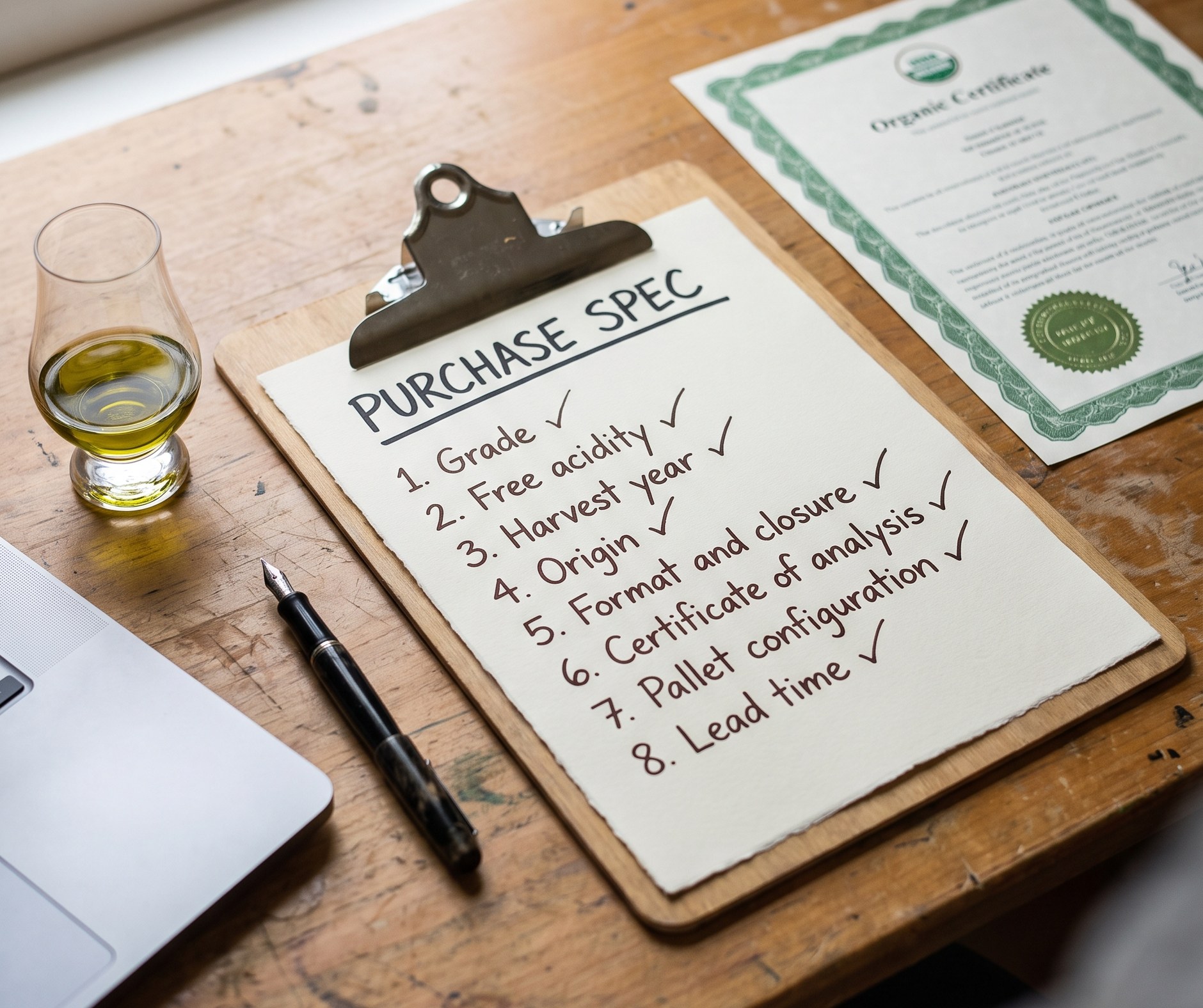
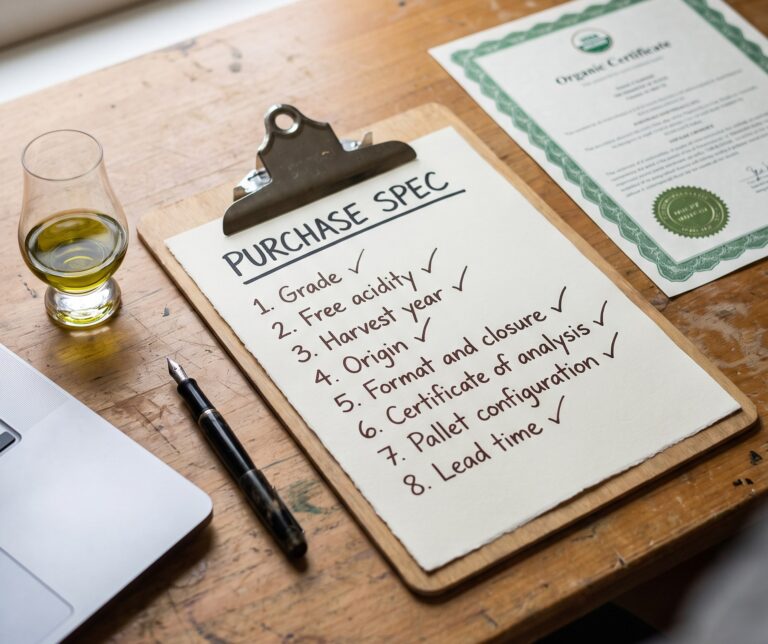
Most olive oil orders say two things: “extra virgin” and a number of litres. Neither tells you what will arrive. A purchase specification is eight lines, and each one closes a gap a supplier could otherwise fill however they like.
The eight lines, in the order they matter
- Grade. Extra virgin, virgin or olive oil – a legal grade, not a description.
- Free acidity, guaranteed. Extra virgin allows up to 0.8%. Ask for the maximum the supplier will put in writing.
- Harvest year. The year the fruit was picked, not the best-before date.
- Origin. The country at least; better, the region or the groves.
- Format and closure. The container, its size and how it is sealed.
- Certificate of analysis. One per lot, before the goods ship, not after they arrive.
- Packaging and pallet configuration. How many units, how they are stacked, how they are labelled.
- Lead time. From confirmed order to goods ready, including time for any label changes.
How to check an organic certificate
Five things, and the first four are on the certificate itself:
- Who issued it. It should name an approved certification body.
- What it covers: the farm, the mill, the bottling, or only one of them. This is the scope, and it is where the gap usually is.
- Which products it covers.
- The expiry date.
- The operator name. It should match the company on your invoice. Very often it does not.
Four questions that tell you whether a supplier knows
- Which lot will I receive, and can I see its analysis now?
- What was the harvest date of that lot?
- Who bottles it, and is the bottler covered by the organic certificate?
- What happens if the analysis on arrival does not match the one you sent?