The Smoke Point Myth – Why Extra Virgin Olive Oil Belongs on High Heat
🗓 30.07.26
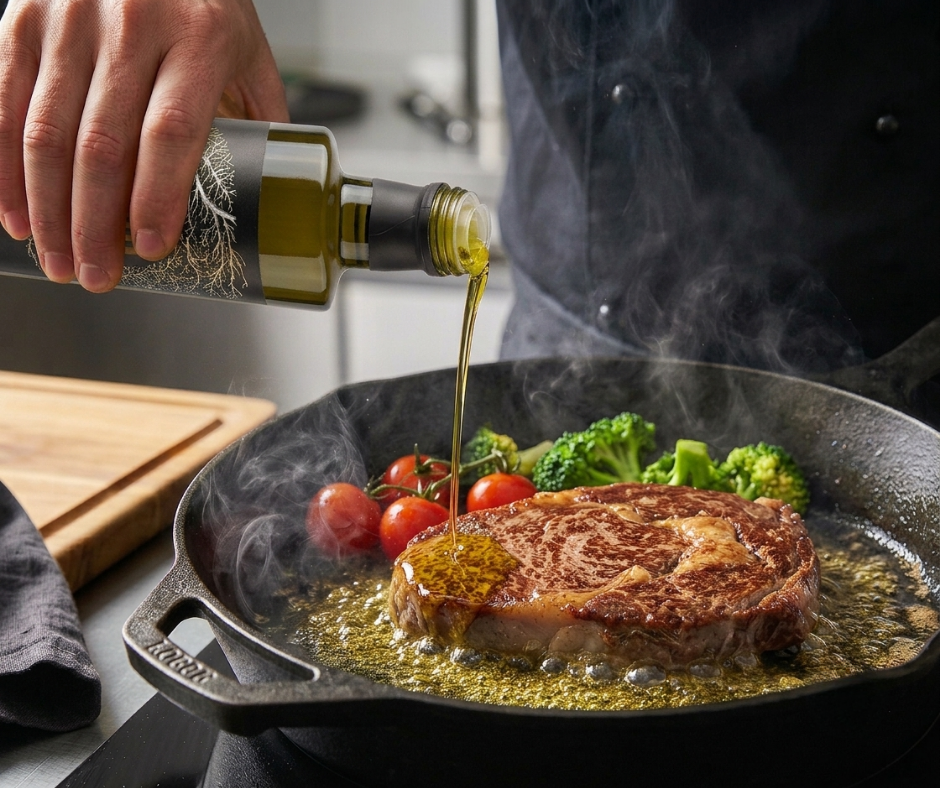
Few kitchen myths have proven as persistent as the idea that extra virgin olive oil cannot be used for cooking. Restaurant blogs, cookbooks, and even nutrition guides have repeated the warning for decades. Yet a closer look at the science, the standards, and the day-to-day practice of Mediterranean kitchens tells a very different story. For professional buyers and operators, understanding what is actually happening when EVOO meets heat is essential not only for kitchen performance, but for sourcing decisions.
1. What the Smoke Point Really Measures
The smoke point of an oil is the temperature at which it begins to produce visible smoke and break down. It is not, however, the temperature at which an oil becomes harmful or loses all value. Genuine extra virgin olive oil typically has a smoke point ranging between 190C and 215C, well above the temperatures used in everyday cooking, sauteing, pan-frying, roasting, and most shallow-fry applications. By contrast, a domestic stovetop saute rarely exceeds 175C to 180C. The smoke point is therefore not a barrier to cooking with EVOO, it is a comfortable ceiling.
2. Why Polyphenols Make EVOO More Stable Under Heat
Beyond smoke point, the more meaningful measure of an oil’s behavior under heat is oxidative stability, how slowly it degrades when exposed to high temperatures and oxygen. Independent studies have repeatedly shown that extra virgin olive oil outperforms many seed and refined oils on this measure, despite having a lower smoke point on paper. The reason is its natural antioxidant load: polyphenols, tocopherols, and oleocanthal act as a built-in defense system, slowing the formation of oxidation by-products. In other words, EVOO does not just resist heat, it actively protects the food cooked in it.
3. What This Means for the Kitchen and the Supply Chain
For professional kitchens, the practical implication is clear: a single high-quality EVOO can serve almost every cooking application, from cold dressings to high-heat roasting. This simplifies inventory, improves consistency, and reinforces a premium ingredient story. For buyers and category managers, it strengthens the case for sourcing high-polyphenol, traceable EVOO not just as a finishing oil, but as a core cooking fat. The smoke point myth has quietly pushed EVOO into a corner of the kitchen it never belonged in. The science, and the centuries of Mediterranean practice, agree: real extra virgin olive oil is built to cook.