Cold Press vs. First Press – Debunking Olive Oil Marketing Myths
🗓 29.06.26
Walk into any supermarket and you’ll see labels proudly claiming “cold pressed” or “first cold pressed.” These phrases sound premium and traditional but what do they actually mean today? Understanding these terms helps you better appreciate how olive oil is produced and what stands behind quality.
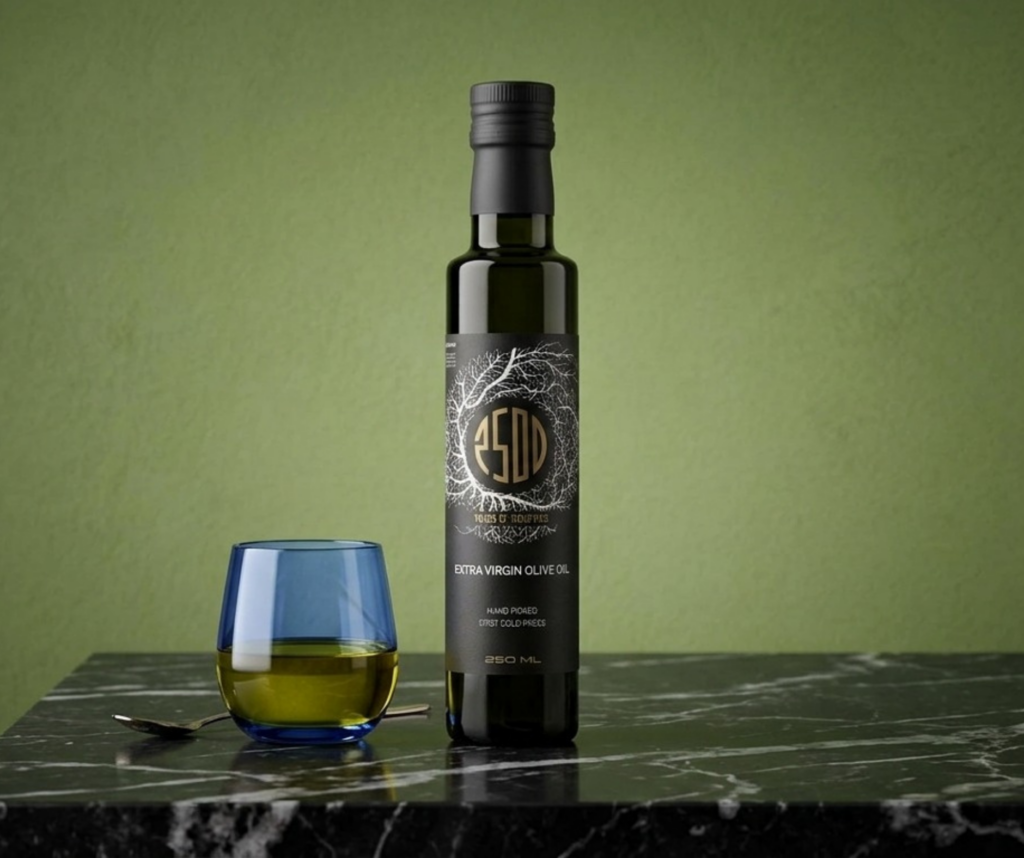
1. What “Cold Pressed” Actually Means
“Cold pressed” refers to the extraction process, where olives are processed at controlled temperatures (typically below 27°C) to preserve aroma, flavor, and nutritional compounds like polyphenols.
This method ensures that the oil maintains its natural characteristics, which is why it is closely associated with high-quality olive oil. In modern production, all extra virgin olive oils follow this principle to protect their integrity.
2. The Meaning of “First Press”
The term “first press” comes from traditional methods where olives were physically pressed multiple times. The first extraction produced the purest and highest-quality oil, while later presses yielded lower grades.
Today, however, olive oil is extracted using continuous mechanical systems, meaning the oil is obtained in a single process. The term “first press” remains as a reference to that original, highest-quality extraction.
3. Understanding the Difference Today
In today’s context, both terms point to the same idea: a high-quality extraction process that respects the olive and preserves its natural properties.
“Cold pressed” emphasizes temperature control during extraction, while “first press” reflects the historical concept of obtaining the best oil from the first extraction. Together, they highlight the craftsmanship and care behind producing premium olive oil.